
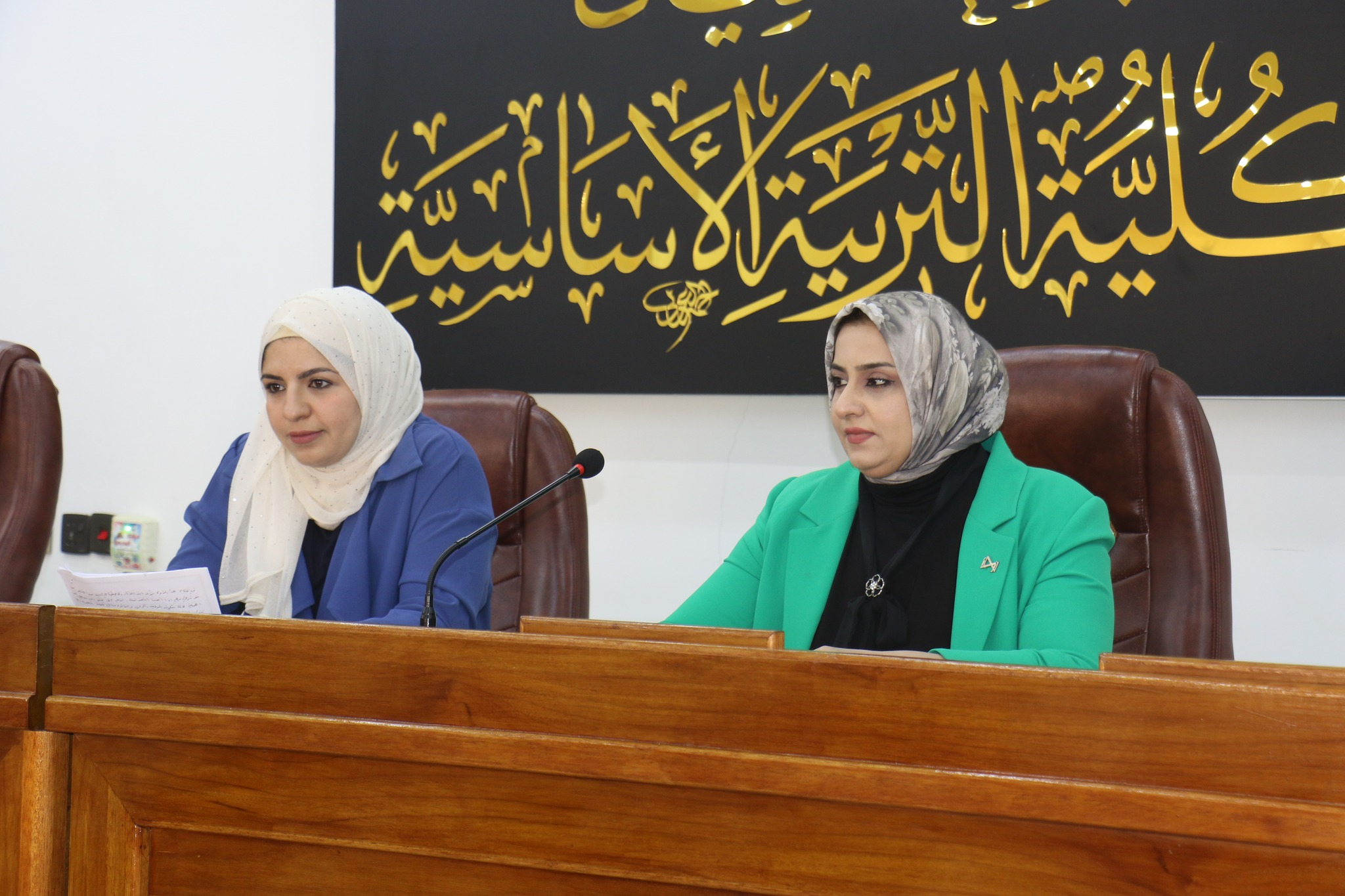
Diyala University opens a window on smart education
Diyala University opens a window on smart education… through a pioneering specialized seminar on the use of artificial intelligence in improving the educational process
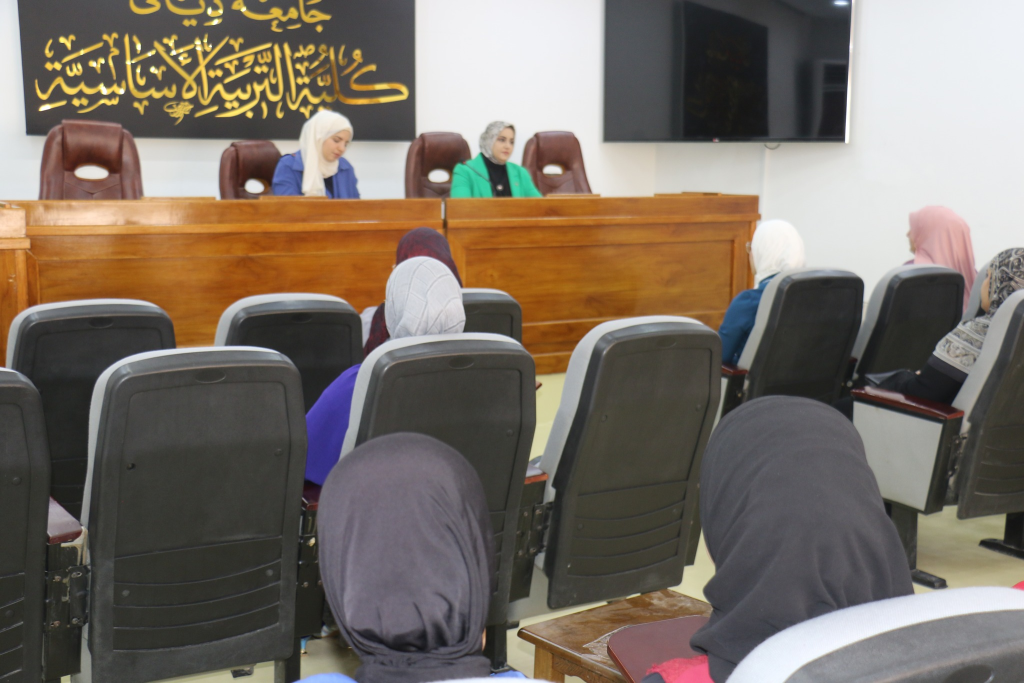
As part of its efforts to keep pace with technological developments and enhance the quality of education, the Faculty of Basic Education at the University of Diyala organized a specialized seminar entitled “Artificial Intelligence and its Role in Improving the Educational Process,” attended by a number of professors and students, as part of the faculty’s efforts to promote digital skills and innovation in the academic environment.
The seminar was presented by Assistant Professor Inam Muhammad Mansour and Assistant Professor Hiba Ahmad Hadi, and aimed to highlight the importance of employing artificial intelligence technologies in developing the educational process and achieving more efficient and effective learning outcomes.
The seminar discussed several key topics, including: introducing students to the concept of artificial intelligence, its origins and development, its types, and its growing role in various sectors, especially in education. The second topic addressed educational AI tools, such as adaptive learning applications, smart aids, and automatic assessment platforms, and how they can be used in classrooms.
The third theme highlighted the topic of personalized education using artificial intelligence, by adapting educational content to suit the needs of each student and improving the individual learning experience. The fourth theme concluded with the most prominent ethical challenges associated with the use of artificial intelligence, such as privacy, fairness in access to technology, and the risks of over-reliance on smart systems.
The symposium recommended the gradual and thoughtful integration of artificial intelligence technologies into the educational process, training teaching staff and students to use these tools effectively and safely, while emphasizing the importance of commitment.


You may also like

The identity of thought and the memory

Happy New Year
