
A journey through the memory of old papers…
A training course at Diyala University brings historical manuscripts and documents back to life
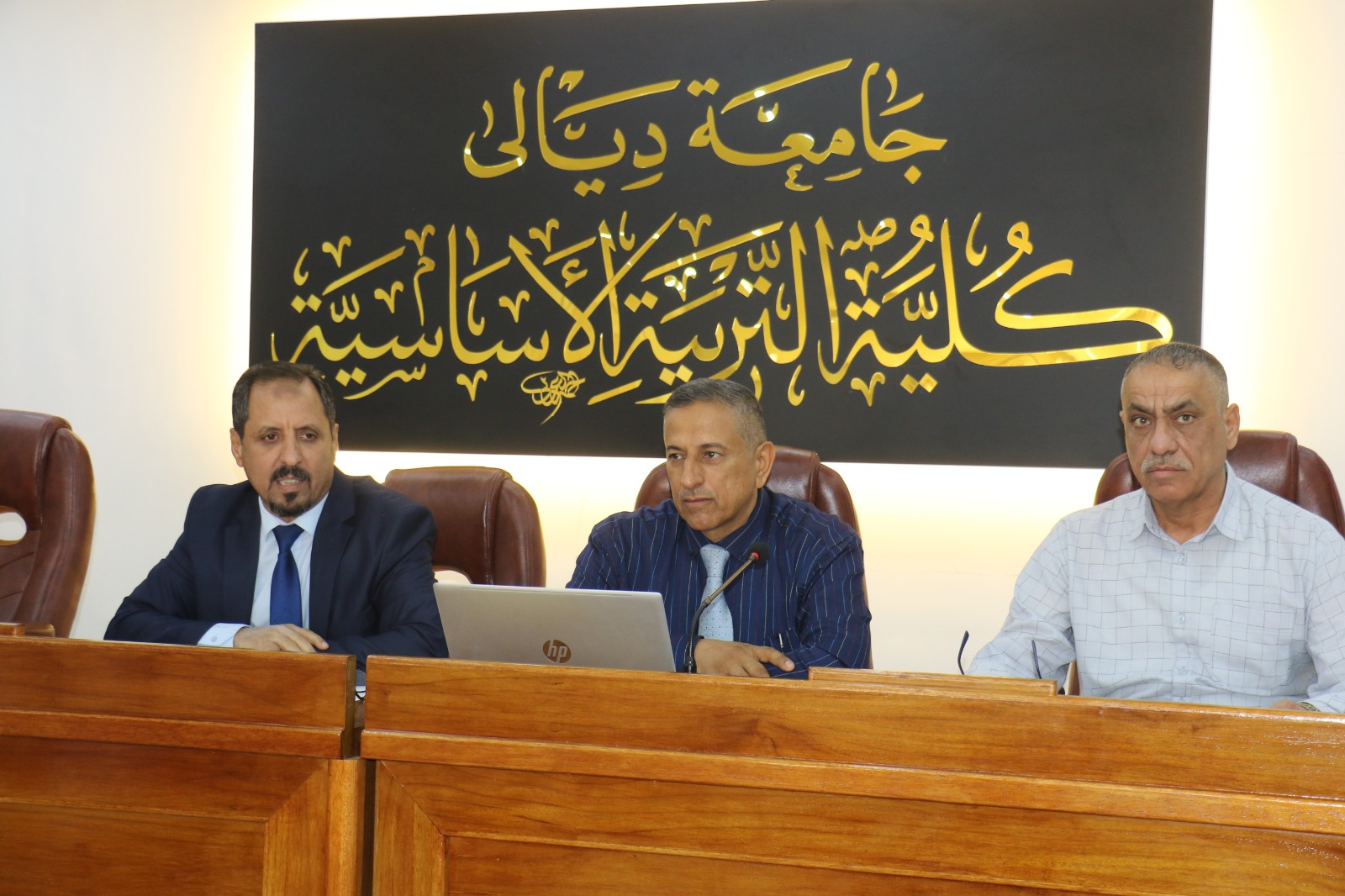
This morning, the Faculty of Basic Education launched a specialized training course entitled “The Importance of Manuscripts and Documents in Historical Studies,” with the participation of a number of teachers, researchers, and undergraduate and graduate students. The course aims to deepen understanding of the importance of original historical material as a primary source in writing and interpreting history.
The first day of the course featured a lecture by Dr. Mahmoud Fayyad Hamadi, in which he discussed the importance of historical manuscripts, their types, and their uses in historical research. He reviewed their sources, methods of analysis, and the challenges researchers face in dealing with them, explaining that a manuscript is not just a text, but a cultural document that expresses its temporal and intellectual context.
The second day was devoted to a lecture by Dr. Khalid Turki, who gave a comprehensive explanation of the definition of manuscripts, their technical and physical characteristics, and their advantages as unique research tools, pointing out the importance of reading the margins, comments, and symbols that may carry historical references no less important than the text itself.
On the third day, Dr. Qahtan Hamid Kazim gave an in-depth lecture entitled “Documents and Their Importance in Historical Research,” in which he discussed the difference between a document and a manuscript, the types of official and unofficial documents, the mechanisms for their adoption as a reliable source, as well as their impact on reconstructing historical facts and correcting traditional narrative paths.
The course included visual presentations of a collection of rare historical manuscripts and documents, with detailed explanations of their contents, the symbols used in them, the scripts, and the materials on which they were written, adding a practical and applied dimension that enhanced the scientific value of the course.


You may also like

The identity of thought and the memory

Happy New Year
