
A Journey into the Eloquence of Light
Diyala University Reveals the Secrets of Linguistic Beauty in the Prayers of Lady Fatima (peace be upon her)
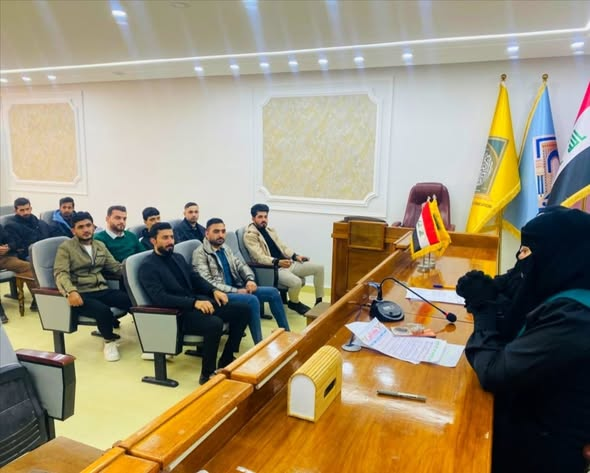
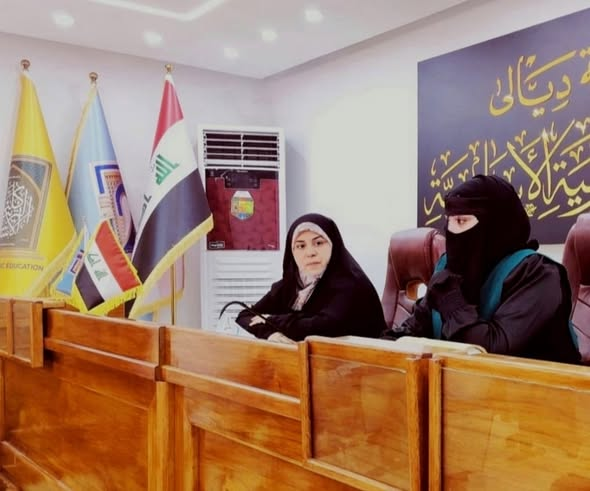
The Faculty of Basic Education at the University of Diyala, represented by the Arabic Language Department, in collaboration with the Continuing Education Division and the Media and Government Communication Division, organised a specialised scientific symposium entitled: ‘Linguistic aesthetics in the supplications of Lady Fatima (peace be upon her): The Supplication of Light as an example’. The seminar witnessed active participation by a number of teachers and students interested in linguistic and rhetorical studies and religious texts.
The seminar, which was presented by Dr. Rabia Hussein Mahdi, aimed to reveal the elements of linguistic and rhetorical beauty inherent in the Prayer of Light of Lady Fatima (peace be upon her), in terms of the precision of word choice, depth of meaning, and beauty of composition. The symposium also sought to contribute to the enrichment of linguistic studies related to the traditional supplications of the Ahl al-Bayt (peace be upon them) and to highlight the remarkable harmony between the refined linguistic structure and the devotional and deeply spiritual nature of the supplication.
The symposium included a discussion of multiple and rich themes. The first theme aimed to introduce the Du’a al-Nour in terms of its attribution, dissemination, and general themes. The second topic addressed the importance of linguistic and rhetorical study of supplication texts and how they are not mere words but rather an integrated artistic structure. The third topic addressed the close link between the aesthetics of language in the text and the devotional and spiritual goal sought by this beauty.
At the conclusion of its proceedings, the symposium recommended the need to highlight the uniqueness of the supplications and texts attributed to Lady Fatima (peace be upon her) as linguistic and spiritual treasures, as well as to study the linguistic aesthetics of these supplications, which have the extraordinary ability to address the mind and attract the soul to ascend to the highest realm.
This scientific symposium is in line with the 17 Sustainable Development Goals adopted by the United Nations, and is particularly relevant to the following goals: Goal 4: Quality education: by promoting specialised scientific research in the Arabic language and Islamic heritage, and disseminating in-depth academic knowledge that raises the quality of higher education. Goal 16: Peace, Justice and Strong Institutions: Studies that promote a shared understanding of religious heritage contribute to building a more tolerant and peaceful society and reflect the powerful role of academic institutions in building community awareness. Seventeenth goal: Partnerships for the goals: The cooperation between the Arabic Language Department and the Continuing Education Division is an example of effective partnership within an educational institution to achieve shared academic and cultural goals.


You may also like

The identity of thought and the memory

Happy New Year
