
Dr. Mohanned is a Head of a Scientific Conference
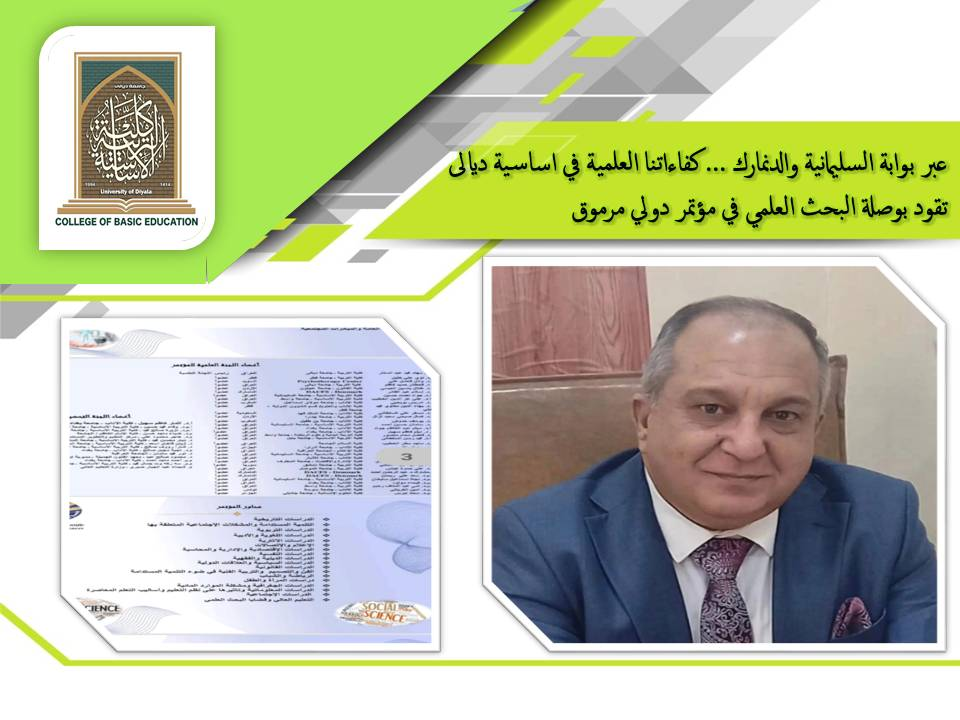
Through the gates of Sulaymaniyah and Denmark… Our scientific expertise in Diyala leads the way in scientific research at a prestigious international conference
In a new scientific achievement that adds to the college’s long record of academic and research excellence, Professor Muhannad Mohammed Abdul-Sattar Al-Naimi, a lecturer in the Department of Psychological Counseling and Educational Guidance at the College of Basic Education at the University of Diyala, as chair of the scientific committee at the 8th International Scientific Conference on Humanities and Social Sciences, organized by the North European Academy of Sciences and Scientific Research – Denmark, in collaboration with the College of Basic Education – University of Sulaymaniyah, scheduled to be held from November 26 to 29, 2025, under the slogan:
“Digital Transformation and the Future of Social Sciences and Humanities.”
This selection comes in recognition of Prof. Dr. Muhannad Al-Naimi’s extensive scientific experience and academic excellence in his field of specialization, as well as his active contributions to the development of scientific research at the local and international levels.
On this occasion, the Dean of the College, Assistant Professor Dr. Ayman Abdul Aoun, praised this scientific achievement, stressing that the selection of one of the college’s teaching staff to chair a scientific committee at a prestigious international conference reflects the high academic standing of our teaching staff and is an incentive for further excellence and achievement.
It is worth mentioning that the conference aims to discuss issues of digital transformation and its impact on the development of social sciences and humanities, strengthen international research partnerships, and support researchers in presenting their scientific outputs within an international academic environment.
This unique scientific activity is in line with the Sustainable Development Goals (SDGs) adopted by the United Nations, particularly Goal 4: Quality Education, through supporting scientific research and developing academic capabilities, and Goal 17: Partnerships for the Goals, through cooperation with prestigious international scientific institutions.


You may also like

The identity of thought and the memory

Happy New Year
