
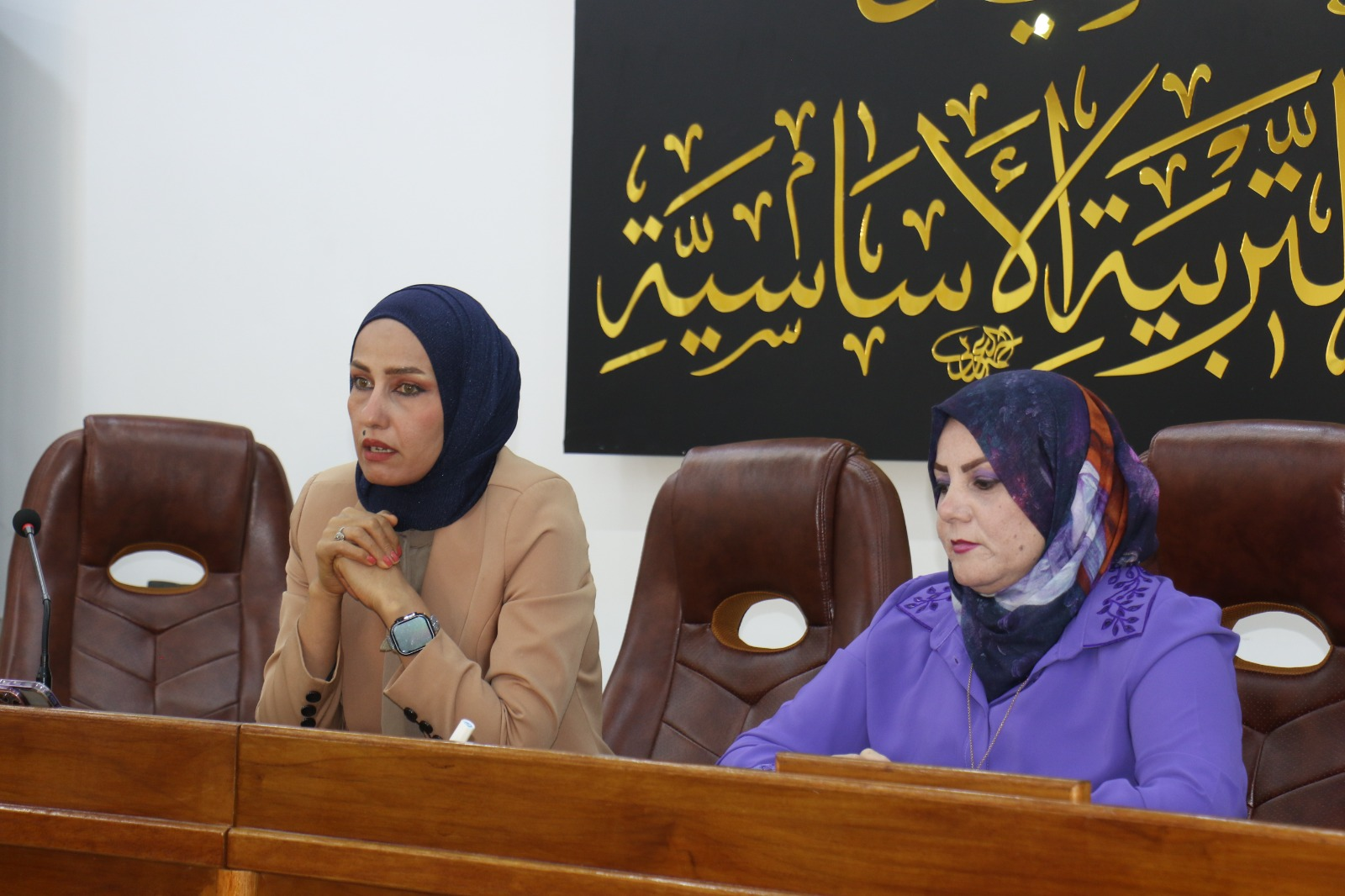
Classrooms without walls… Academic symposium at Diyala University puts literacy programs on the sustainable development map
As part of its efforts to promote community awareness and academic engagement with national and development issues, the Faculty of Basic Education at the University of Diyala organized a specialized scientific seminar entitled “Literacy Programs Implemented in Rural and Remote Areas: Reality and Ambition,” in collaboration with the Women’s Affairs and Continuing Education Unit and the Department of Physical Education and Sports Sciences.
The symposium was attended by a number of academics, researchers, and those interested in educational and social issues. It addressed important topics related to the reality of illiteracy in rural communities, the challenges facing the implementation of programs dedicated to eradicating it, and ways to develop these programs to be more effective and sustainable.
Prof. Amal Sabih Salman, Director of the Women’s Affairs Unit at the college, gave a scientific lecture as part of the first theme of the symposium, in which she addressed the social and cultural dimensions of illiteracy and emphasized the need to adopt flexible educational policies that take into account the specificities of remote areas. She also highlighted the role of academic institutions in supporting literacy initiatives through scientific research and community service.
In the second theme, Assistant Professor Hala Ali presented a research paper discussing the impact of physical and sports activities as a supportive tool in non-formal education programs, especially in rural environments, noting that the integration of physical education can contribute to attracting and motivating target groups to participate.
The college dean emphasized that this symposium is a practical step toward activating the role of education in achieving comprehensive development, especially among marginalized groups and in areas suffering from educational marginalization.
The symposium concluded with recommendations that emphasized the importance of integrating governmental, community, and academic efforts to design literacy programs that take into account cultural and geographical differences and are based on quality and sustainability standards, thereby contributing to the achievement of comprehensive and equitable education that enhances human capabilities and contributes to the real development of society.
This symposium is in line with the 17 Sustainable Development Goals (SDGs) adopted by the United Nations, specifically Goal 4: “Ensure inclusive and equitable quality education and promote lifelong learning opportunities for all,” and Goal 5, “Achieve gender equality and empower all women and girls,” as well as Goal 10, “Reduce inequality.”


You may also like

The identity of thought and the memory

Happy New Year
